Sunday, 21 October 2012

Into the Wild: Sons of Heroes SS13


Sons of Heroes roars back onto the contemporary menswear scene for SS13, bred from a wild and rebellious desire to be heard in those urban areas plagued by social and cultural deprivation. The summer collection is tinged with the striking visual presentation of David Bowie and his alter ego Ziggy Stardust, concocted with the political unrest of the 1980s and the potent sport influences of the time.


This collection is all about reinvention – last season for AW12 the label only teased the potential for mixed fabrics, most memorably in the form of what looked like an incurably cool hybrid between a structured classic Aertex shirt and an American varsity jacket. Mind blown.


 Creative Director Lee Sedman exploits that potential this season, tempering razor sharp tailored classics with aggressive, uncompromising leather body paneling. There is a real sense of British heritage bled through with an American adventurousness here, realised quite literally in the label’s inclusion of stars & stripes pieces.


 The same unexpected juxtapositions are also evident in the lookbook styling: we have casual vests teamed with drop crotched tweed tailored trousers; the classic aesthetic electrified into fashion forwardness by bold Ziggy Stardust lightning bolts cascading through jaggedly spliced panels. 


 But now let’s get to what the label is famous for: animal print. For SS13 the label’s untouchable luxury-grunge shows no sign of being tamed. Magnetic imagery featuring gnasher-bearing lions and death-stalking tigers in digitally printed garments are as present as ever – equally endearing as they are intimidating - which undoubtedly explains their mysteriously alluring appeal. This time Mr. Sedman adds Zebras to his list of taxonomy, drenched in acid pink dye for one look that ensures the collection stays faithful to the brand’s inherent punk influences.


With its signature style reminiscent of those (frankly exhausted) Givenchy Rottweilers, it’s hardly any shock that Sons of Heroes has become a more exclusive, niche alternative for celebrity stylists. The animal print bombers have been immensely popular with the urban music scene, particularly in the American market where the brand has already been donned by the likes of Rihanna, Justin Bieber, 2 Chainz, Trey Songz, and Wiz Khalifa to name a few. Not bad for a label that’s barely 5 seasons old.


 Super-talented photographer Harriet Turney returns this season shooting brutally confident looks from brooding-exuding model Ricki Hall. Harriet, who specialises in fashion portrait documentary, is clearly building quite a name for herself having already shot editorial brand content with Stussy, Adidas and Puma. She is currently working with some of the biggest names in graffiti.

Grow some balls and grab some clothes.

http://www.sonsofheroes.com/

Sunday, 30 September 2012

BAEL: Beautiful Monsters


Are you GAY? STRAIGHT? BLACK? WHITE? FAT? SKINNY? RICH? POOR? CHRISTIAN? MUSLIM?

The remanufactured bullshit of such labels in society - of those defacing constructions imposed upon human identity - are no longer important. 


At least not in the world of fine artist Michael Bell, who goes by the suitably mysterious and somewhat primordial pseudonym of "BAEL". Mr. Bael has wiped the slate clean of his figures; cleansed them of life's suffocating and compromising 'titles'. Instead, his subjects have regressed (or progressed?) to a collection of raw humanoids, naked in a world where gender, race, sexuality, religion no longer define humanity; where "purity" and "essence" of being finally have their meanings reinstated. 


Here the human body is stripped in favour of a brutally visceral exploration of deep human emotion. Initial impressions? Well, if I was totally honest I'd say that I can't stop seeing that terrifying Cyborg Ninja from the Metal Gear Solid franchise. It's that anthropomorphism, the confluence between animal and human which tinges these pieces with the horror of classic sci-fi monsters - those which, rather chillingly, have their essence bred in human biology.


In any case, these pieces are positively haunting and disturbing. The figures are like ethereal apparitions from a nightmare, projections of our most deeply repressed fears and anxieties. What intrigues me about these subjects is just how vivid they are despite such a crucial lack of physical information. At first sight they give the impression of being rendered through quick, rough etching marks in a similar vein to Egon Schiele - everything appears so suggestive and enigmatic. Yet despite being so puzzlingly minimal, these figures offer more emotional truth; have more substance and presence than a dense photorealistic representation of the human form.


While Bael has asserted his artistic determination to avoid making his viewers feel "comfortable" and "satisfied" (and I do indeed feel moderately freaked out when I consider his pieces for too long) - I still think there's something redemptive and liberating to be drawn from his figurative work. In their reductive starkness, these oddly feral creatures look to a Prelapsarian time (a future?), with human identity unspoiled by the pangs of contemporary society. No longer is physical aestheticism a fragile target for scrutiny and anxiety; now it serves as a mere vessel through which the artist can explore the greater importance of human emotion.


And through Bael's provocative use of vermilions, the nature of those emotions are pretty clear. His faces are suspiciously bloodied, with mouths pinned or scratched out that amplify the certain lack of human civilisation here. More and more we err on the side of animalism with Bael, his figures found lurking, stalking, crouching - generally looking threatening and diabolical. The monochrome offset only by the blood lines and fills truly exemplify these characters as possessing nothing but unbridled, fiery emotions: hot, aggressive sexuality; youthful angst and violence bubbling beneath the molten surface. 


The piece above, entitled 'Cons', is my favourite work from Bael. For me it encapsulates everything the artist is trying to articulate. Stained with the metaphorical blood on its hands, the figure appears like a new-born, caught in a existentialist moment of self-discovery and disgust at the revelation of its own being - of those base desires of human identity which come to define it more truthfully than any other. 

Don't kid yourself.


Saturday, 29 September 2012

Tuesday, 18 September 2012

Chloe Early: 9/11 in Disney Land


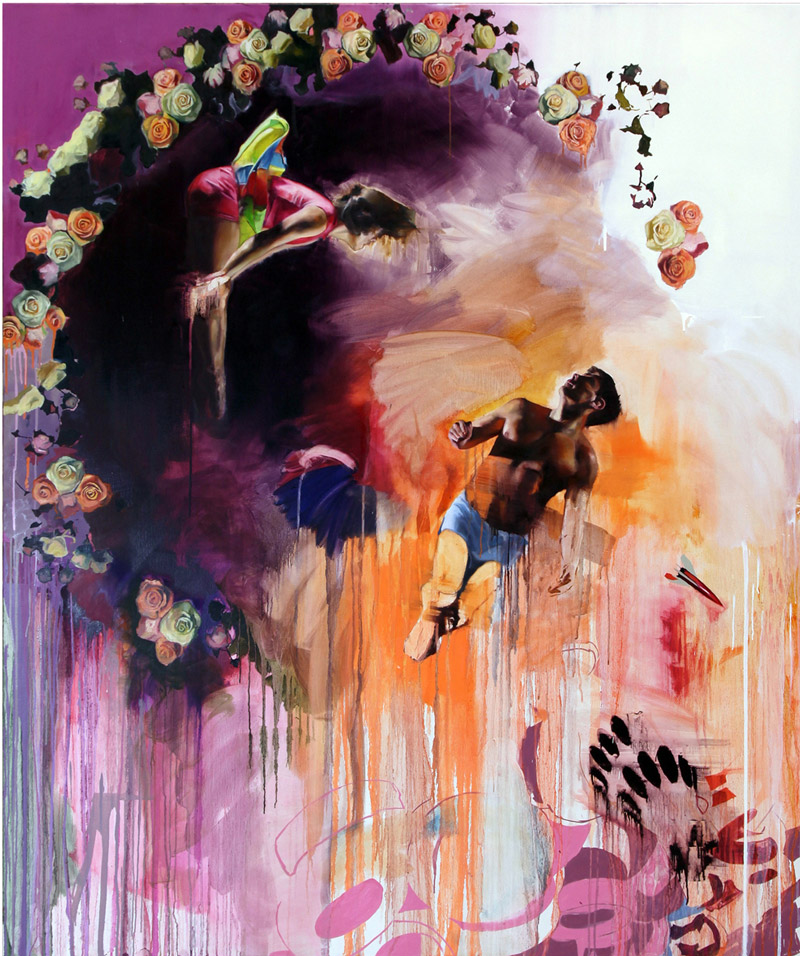
Now, in the normal way I would copy every other overzealously polite blogger and apologise for my delay in posting new material. No; I haven't been recently hospitalised and no, I haven't been occupied by a family bereavement. In any case, what I have to show you next is worth the wait. If you're like me and have an insatiable appetite for bittersweet art, then I present you with 9/11 debris decorated in a lush Garden of Eden:


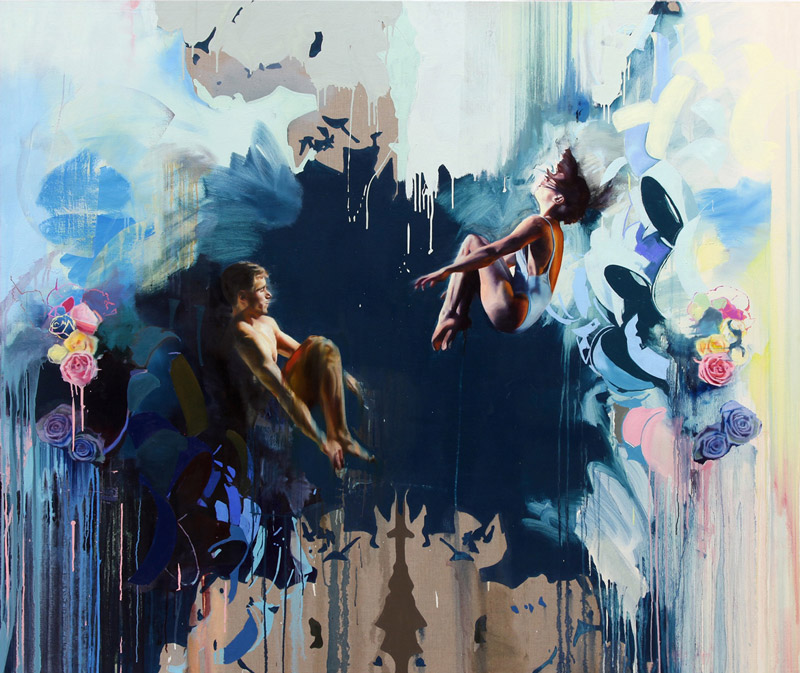
At least that's what I see. Mind-fuck? And what a great one. The artist behind the brutal chaos is Chloe Early who, according to her blog, quite plainly and innocently "Paints Pictures". Clearly not as innocent as she professes. Early works with disconcerting yet gripping juxtapositions: exuberant and abundant nature framed by harsh and suspiciously posited airplane engines - callously discarded and reassembled in the aftermath of a mysterious tragedy. 


Everywhere you look there's an explosion of bold colour that suggests life and vitality and liberation, but it's always muddied by an undercurrent of violence bubbling beneath the surface, or by a triad of missiles delicately descending at the bottom of the artist's canvas. So while at first sight you may imagine Early's suspended figures to be falling in blissful oblivion, there's a more troubling ambiguity here. 


Her central subjects - of which there is usually a pair - seem frozen in time and space, locked in some dream-like fantasy which anaesthetises them to the barbarity inflicted upon them. As mentioned, these airplane turbines almost take on a new, diabolic identity in Early's contrived arrangement of them, as if to echo the sick trivialisation of tragedies like 9/11 by manic pop references in the media.


Early's religious undertones here are clear, but if these landscapes are indeed alluding to a spiritual realm, the question I ask myself is: Where are these figures going? Are they angels falling or ascending to Heaven? Are they infinitely and indefinitely spinning in space? Or perhaps they are being exhibited in the most explicit sense: innocent victims falling from an obliterated aircraft...


There are certainly sniffs of Micallef's 'Disney Torture Porn' aesthetic here (research it if you think I've coined that term out of clinical pervertedness). It's that concoction of flowery lightheartedness bled with the fumes of a morbid utopia that works so well. It transmits doubt into the viewer's eye; tips the prospect of escapism into a nihilistic post-apocalyptic world (and vice versa). 


Early is a master of decontextualising and recontextualising iconography, with a keen eye for subverting images of celebration; we have Micky Mouse mingled with bullet shells laced with roses, patterning a memorial that evokes the insanity of war's warped realities. In fact, in their ordered presentation and arrangement, these pieces have the seductive scent of glossy magazine covers, as if beneath the chaos lurks a subtly packaged symphony of false ideals.

Wake up and smell the debris.


Sunday, 26 August 2012

Recession Rebellion: Illustrating the Fashion Industry


The fashion industry is in crisis. Groundbreaking revelation? No, because it always has been. We just don’t see what lurks beneath the beautiful veneer of an exquisite garment flourishing on a catwalk blinded by camera flashes and pretentious celebrities. We don’t see the crushing ballast threatening the very heartbeat of the designer’s creativity. As a label becomes more successful, it becomes greedier – whilst the smaller designers clasp to even remain buoyant on the restless tide of a mercurial and fickle fashion climate. Ultimately, most companies will sink, whilst some of the higher fliers inevitably buckle under the drudging demands to deliver season after season (the recent disgrace of one leading designer and the tragic death of another is perhaps still an open wound in our minds here).


A pretty bleak outlook on the industry. Do you have the will to read on? If I were to paint a picture depicting the state of the industry, it would be a dripping black canvas, or perhaps if I was feeling a little creative, an illustration of one of Riccardo Tisci’s Givenchy Rottweilers choking on a fistful of banknotes shoved through its gnashing jaws. At least it’d be honest. Because it is honesty which is becoming scarce to find in a time where designers are really feeling the pinch of the moneymen. Ultimately, it is they who make final decisions – increasingly forcing designers into banal submission of those who hold the cash at the expense of their integrity. The excruciating reality is that financiers do not understand – nor do they care – about the ‘art’ of fashion.


Whilst the buyers may be laughing, the creatives are dying inside: any passionate designer who obsesses over their craft is at their core a tortured artist, with surprisingly little concern for the financial rewards. I, like many designers I have spoken with, will tell you that they design not for ‘the consumer’ but for themselves – as it should be. So the minute a creative is forced to churn out something for sake of the next dollar, there’s a dishonesty and discredit there. He has, against sheer and unrelenting brute force, surrendered to the probing corruption of the businessman. Alas, honesty comes under intolerable strain.

But SS13 is set to offer us at least a few saviours who shine as both rebellious, reckless revolutionaries and positive pioneers, ferociously committed to the truth of their artistic philosophies in the sorry face of the industry. They illustrate a fresh and brutal ‘all’s-not-lost’ attitude that truly quenches an arid thirst for something redemptive. The first is Boris Bidjan Saberi – a designer who’s very name sounds like a nomadic ninja from the cavernous depths of a future sent back through time to rescue us from a moral/financial recession. Saberi is known for his unmistakably brutal grunge; his hard-edged, raw aesthetics and so-called “dark hip-hop”. 


His extreme manipulation of fabrics ventures into the realm of the haunting unknown and to the point of chemical experimentation. Saberi is more than a clothes designer: he evokes a mood, a narrative, an atmosphere inspired by real life crises and thoughtful reactions to the world around him. Just a glance at his clothes tells you he has zero intention of abiding to any imaginary “rules” prescribed by the pressure to “make figures”. It’s admirable, intimidating, and necessarily confrontational. Saberi owns the space. Owns his collection. Extreme plunging drapes and oversized mesh hoods and masks articulate this attitude that refuses to be compromised. 


For SS13, Saberi retains his monochromatic palette but brings us for the first time a more structured and polished collection, featuring a marriage between extreme tailoring and highly adventurous sportswear. If his previous collections were a bunch of teenage outlaws, SS13 is a matured crew of veteran gangsters, glued together and ready to resist as a community not divided by the invasion of the moneymen. There’s an understated, minimalist thread going through SS13 which keeps a sophisticated angst bubbling beneath the surface – but it’s still there: not to be messed with. 


Most memorable for me is the tight tailoring with discrete slit vents on the jacket blazers which hark back to Saberi’s deconstructive style without being too showy. In addition, the new angular waistcoats created a superb, futuristic silhouette around the architecture of the male form. Also striking were the paneled asymmetric shirt collars, and the pure all-white looks were a jarring shock to the system: “purity” is perhaps the last word with which we’d be accustomed to describe Saberi’s aesthetic. Sort of like a schizophrenic clash between the Black and White Swan.


Next, Aitor Throup. Now here's someone who diverges between the role of commercial designer and that of artist, imprinting his unique social comment on the identity of the industry in the most visceral and 3-dimensional way. Saberi’s nomadic style has always been conjured by mesh layering and other transparent fabrics, creating a strong, cocooning sense of protection – but Throup takes that a step further with intriguing concepts of body armour and physical encasing.


The London SS13 collection saw an eerie set of highly dense, scrunched up wire mannequins suspended from the ceiling, in addition to these oddly playful, accessorised skulls, candidly slung over the shoulders of mannequins like trophies from Predator’s latest killing spree. Interestingly, it was reminiscent of Saberi’s SS09 disturbing collection which featured white-clad models suspended from the ceiling by chains. Sounds like I’m trying to promote some kind of sadistic suicide couture.
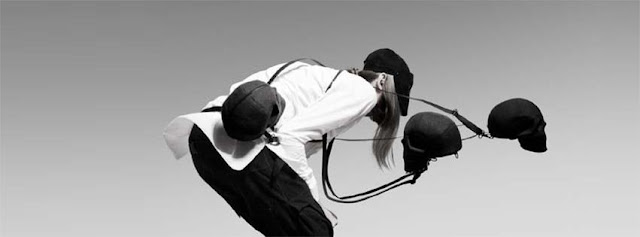

Like Saberi, Throup is an artist – attempting at once to capture the psyche of the modern man. He inhabits an intense, utterly opposing world that would have financiers so groggy with confusion and incomprehension that the only option would be to let the man continue doing his own thing. His signature anatomy trousers absolutely propel Throup beyond the exhausted parameters of fashion trends, with a clear respect for the human body and it’s meticulous formation. 


There’s an anthropomorphism to his drawings, too, with irresistible sniffs of Giger present in his manipulation of the human form through a highly conceptual and deformative - but also reconstructive, lens. It’s like he’s remoulding the overused silhouette, whilst also attuning himself to the anxiety of the industry’s pangs – of which there are many.


Throup is by far one of the most important breakthroughs of the year, deriving his demand – like Saberi – from his mysteriousness – the kind that has made an international success of Hussein Chalayan despite flickering on and off the radar. That sense of the unknown and the unpredictable – relevant both in the collection’s aesthetic but more intriguingly in the uncertainty between the artist’s presence and absence – is what restores the designer’s integrity and in turn the market’s hunger for more.